
Wendy Schmidt · 20 September 2026
Navigating Content Strategies in Restricted Access Digital Environments
Digital environments with restricted access present unique challenges for content distribution because regulatory frameworks, technical limitations, and regional policies often determine what material reaches users in specific locations, and organizations must develop strategies that account for these variables while maintaining compliance across multiple jurisdictions.
Understanding the Scope of Restricted Access
Restricted access environments arise from several sources including government-mandated geo-blocking, data protection requirements, and platform-level limitations that prevent certain audiences from viewing or interacting with material, and researchers at institutions such as the Australian Communications and Media Authority have documented how these barriers affect content availability in Asia-Pacific markets where licensing agreements and censorship rules frequently intersect. Organizations operating in these spaces track changes in legislation and technical standards to adjust their distribution methods accordingly, since failure to account for restrictions can result in blocked content or legal penalties.
Content creators examine the interplay between user location data and access controls because systems often rely on IP addresses, device identifiers, and account verification to enforce boundaries, and studies from the Organisation for Economic Co-operation and Development reveal patterns where over 60 percent of surveyed digital services apply some form of regional limitation. Those who manage content pipelines therefore incorporate testing protocols that simulate access from different countries to identify potential blocks before publication.
Core Challenges in Strategy Development
One primary challenge involves balancing visibility with legal obligations since content that violates local rules on hate speech, gambling promotion, or personal data handling faces immediate removal or fines, and reports from the Canadian Radio-television and Telecommunications Commission highlight cases where media companies revised their upload workflows after regulatory reviews in 2024. Technical issues compound these difficulties when encryption standards or content delivery networks inadvertently route traffic through restricted zones, forcing teams to reroute servers or implement conditional loading scripts.
Another layer of complexity stems from audience fragmentation because users in restricted environments may rely on virtual private networks or proxy services that alter apparent locations, and this behavior disrupts analytics that depend on consistent geographic signals. Observers note that organizations respond by diversifying delivery methods such as native apps with built-in compliance checks and server-side rendering that adapts content based on verified user credentials rather than IP alone.
Practical Approaches to Content Adaptation
Teams often begin by mapping regulatory landscapes for target regions because laws in the European Union under the Digital Services Act differ substantially from those in Middle Eastern countries that require pre-approval for certain topics, and this mapping process includes regular reviews of official gazettes and industry alerts. They then segment content libraries into tiers that range from globally accessible material to region-specific versions that omit prohibited elements while preserving core messaging.
Implementation frequently involves automated tools that flag keywords or metadata against compliance databases, and case examples show how one European publisher integrated these systems to reduce takedown requests by 45 percent within the first year of deployment. Collaboration with local legal experts further refines these strategies since interpretations of vague statutes can shift quickly, and periodic audits ensure that adaptations remain current as enforcement priorities evolve.
Technological and Organizational Supports
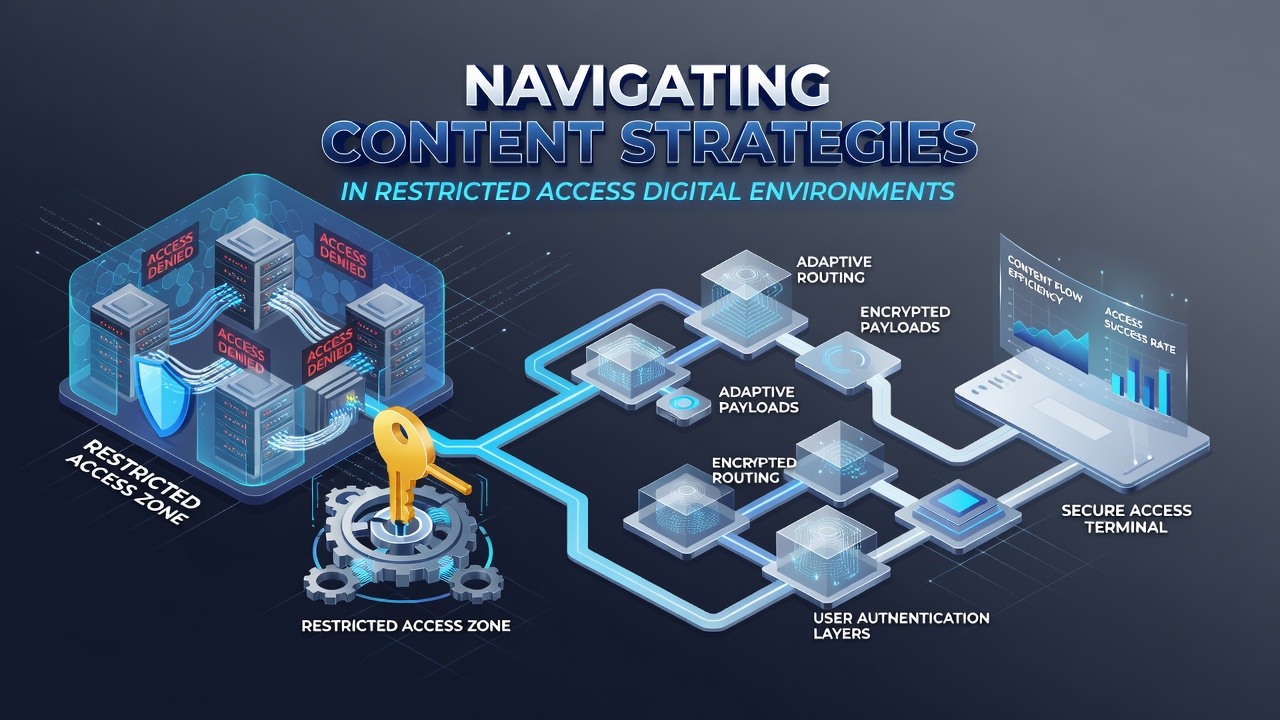
Modern content management systems now include modules designed specifically for restricted environments, allowing editors to set conditional publishing rules based on user profiles and geographic databases, and these platforms integrate with content delivery networks that support edge computing for faster compliance checks. Data indicates that companies adopting such integrated solutions experience fewer interruptions because real-time monitoring alerts teams to emerging blocks before widespread user impact occurs.
Training programs for staff emphasize recognition of red-flag content categories while encouraging creative workarounds such as alternative phrasing or supplementary resources hosted on separate domains, and organizations that invest in these programs report smoother cross-border operations. Partnerships with regional distributors also provide on-the-ground insights that complement automated systems, particularly when cultural nuances affect how restrictions are applied in practice.
Developments Expected by September 2026
Regulatory bodies continue to refine frameworks for digital access, and September 2026 marks the scheduled rollout of updated reporting requirements under several international agreements that will require detailed disclosures on how services handle restricted content requests. Organizations are preparing by expanding their logging capabilities and establishing dedicated compliance roles to meet the anticipated documentation standards without disrupting existing workflows.
Conclusion
Effective navigation of restricted access digital environments depends on systematic analysis of regulatory signals, technical infrastructure adjustments, and ongoing adaptation of content libraries to meet local constraints, and those who maintain these practices position their material for broader reach while minimizing legal exposure across evolving global landscapes.