Wendy Schmidt · 4 October 2026
The Evolution of Tagging Systems in Specialized Member-Only Web Communities
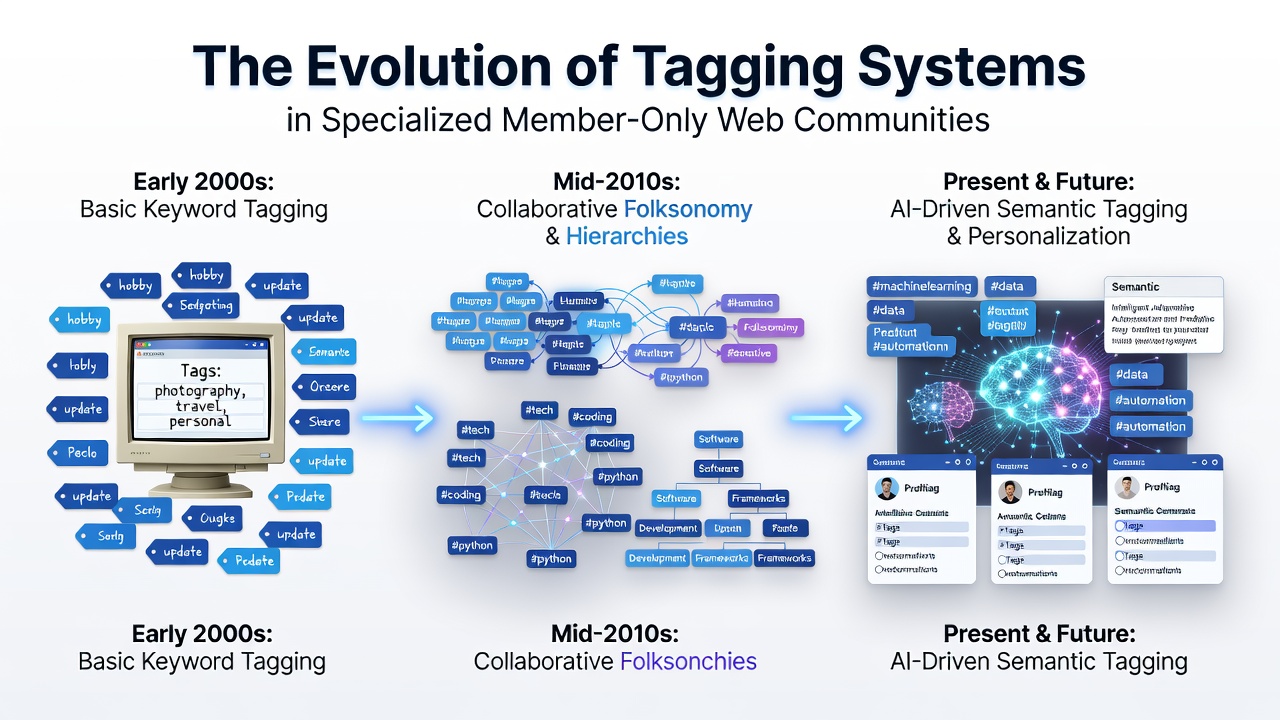
Specialized member-only web communities have relied on tagging systems to organize content since the earliest days of restricted digital spaces, and those mechanisms have shifted considerably over time. Early implementations focused on basic keyword labels that allowed small groups to locate shared files and messages within closed bulletin board systems. Data from early network archives shows that these initial tags operated as simple text strings attached to posts, which helped users filter discussions without advanced search tools.
Foundations in Closed Digital Networks
Researchers examining archived records from the 1980s and 1990s note that tagging emerged in private forums where access required passwords or invitations. Operators assigned tags manually to categorize threads on topics such as software development or hobbyist exchanges, and community members could then retrieve related items through basic search functions. Studies of these systems indicate that the approach reduced duplication while maintaining order in environments limited to dozens or hundreds of participants.
Transition to web-based platforms brought expanded capabilities. By the late 1990s, member-only sites incorporated hierarchical tags that grouped content under broader categories and subcategories. Evidence from university analyses of early web archives reveals that this structure supported larger memberships while preserving the controlled nature of access. Moderators enforced consistent tag usage through guidelines, which prevented fragmentation as user numbers grew.
Expansion During Platform Growth
During the 2000s, tagging systems integrated with database technologies that allowed dynamic filtering and user-suggested labels. Observers tracking online community patterns report that platforms serving niche professional groups, such as independent researchers or creative collectives, adopted these features to handle increasing volumes of shared materials. One study from Canadian academic sources documented how tag clouds became visual aids that highlighted popular topics within restricted portals.
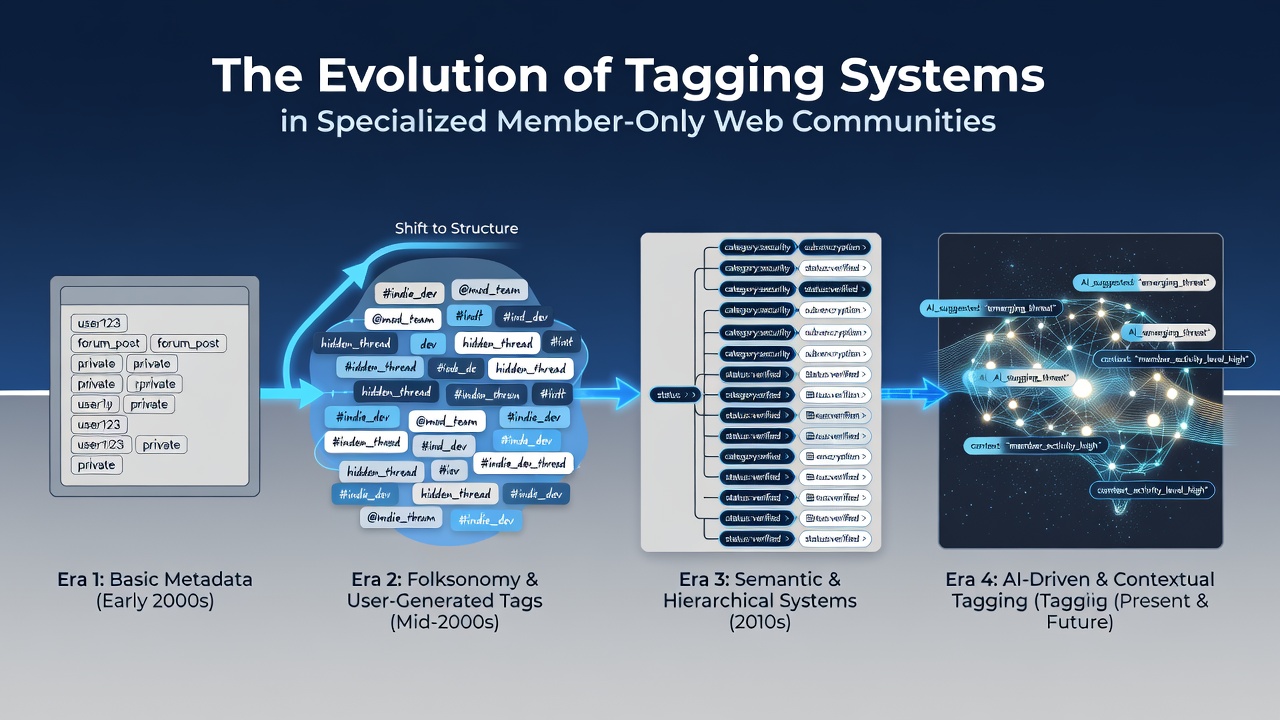
Integration with social features marked another shift. Members gained the ability to apply multiple tags to individual items, which created intersecting connections across content libraries. Figures from industry reports on digital collaboration tools show that this flexibility improved navigation in communities focused on specialized fields like medical research sharing or technical troubleshooting. Administrators retained oversight through approval workflows that maintained tag accuracy.
Contemporary Developments and Automation
Recent years have seen the introduction of automated tagging supported by machine learning models trained on community data. According to research published by the Internet Society, these systems analyze text and metadata to propose tags that align with existing structures. Member-only environments benefit from reduced manual workload, although human review remains common to address context-specific nuances. In October 2026, several platforms serving private educational networks implemented updated algorithms that improved tag precision for multilingual content.
Security considerations have influenced tag system design in controlled settings. Access permissions now often tie directly to tag categories, limiting visibility based on membership tiers. Data from EU digital policy documents indicates that such layered controls help communities comply with privacy regulations while supporting collaborative work. Developers continue to refine these integrations to balance openness within groups against external risks.
Future Directions in Specialized Tagging
Interoperability between different member-only platforms represents an emerging area of focus. Standards developed through collaborative efforts among research institutions allow tags to transfer across systems without loss of meaning. This development supports users who participate in multiple restricted communities, as consistent labeling reduces the effort required to locate information. Reports from Australian communications authorities highlight ongoing pilots that test cross-platform tag compatibility in professional networks.
Analytics layers built on top of tagging systems provide additional value. Community operators track tag usage patterns to identify content gaps or popular themes, which informs decisions about new resources. Evidence gathered by academic teams at various universities demonstrates that these insights contribute to sustained engagement in long-running member groups.
Conclusion
Tagging systems in specialized member-only web communities have progressed from manual keywords to sophisticated automated frameworks that incorporate permissions and analytics. Each stage built upon prior capabilities while addressing the unique constraints of restricted access environments. Continued refinement through technological and procedural adjustments supports the ongoing organization of content within these digital spaces.